A Guide to Greek Wine
Greece has been producing wine for longer than almost anywhere on earth. Vines were cultivated here as far back as 6,500 years ago, and by the time ancient Athens was at its height, Greek wine was being shipped across the Mediterranean. Many of the grape varieties grown in Greece today are found nowhere else in the world. While Greek wine was not always on the list that serious wine drinkers kept in their heads, that has changed considerably, and for good reason. Wine is part of each of our Greek cycling trips in its own way. On our Zagori trip, we hold a wine tasting led by a local expert who brings in bottles from across the country. This guide, with information kindly provided by Katerina, one of our wine experts from Zagori, offers a unique local insight into the best wines of the region.

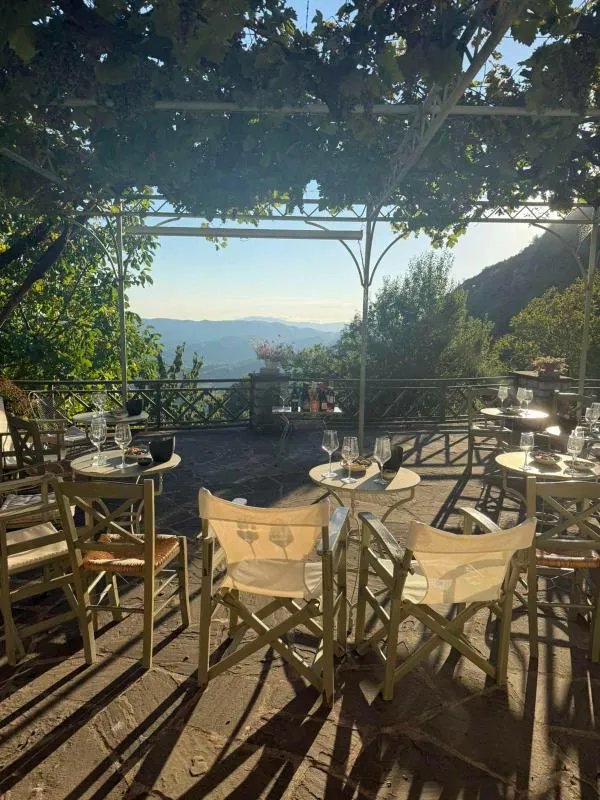
A Short History of Greek Wine
Greece is not a single wine region. It is a collection of climates, elevations, soils and island microclimates that produce wines with very little in common except their origin. Santorini, with its volcanic ash soils and cool maritime winds, produces white wines of intense minerality. The high-altitude vineyards of Macedonia in the north produce structured reds capable of ageing for two decades.
Greek wine is built primarily on indigenous varieties that most people outside Greece have never encountered. Assyrtiko, Xinomavro, Agiorgitiko, Moschofilero, Malagousia: these are not names that appear on many wine lists in Britain, but they should. Each of them is distinctive and is tied to a specific part of the country.
Greece has 28 PDO wine regions (Protected Designation of Origin), covering everything from Naoussa in Macedonia to Nemea in the Peloponnese to Samos in the eastern Aegean. The system reflects the genuine diversity of what is being produced and is worth paying attention to when you're choosing a bottle.
Recommended Wines from our Local Suppliers
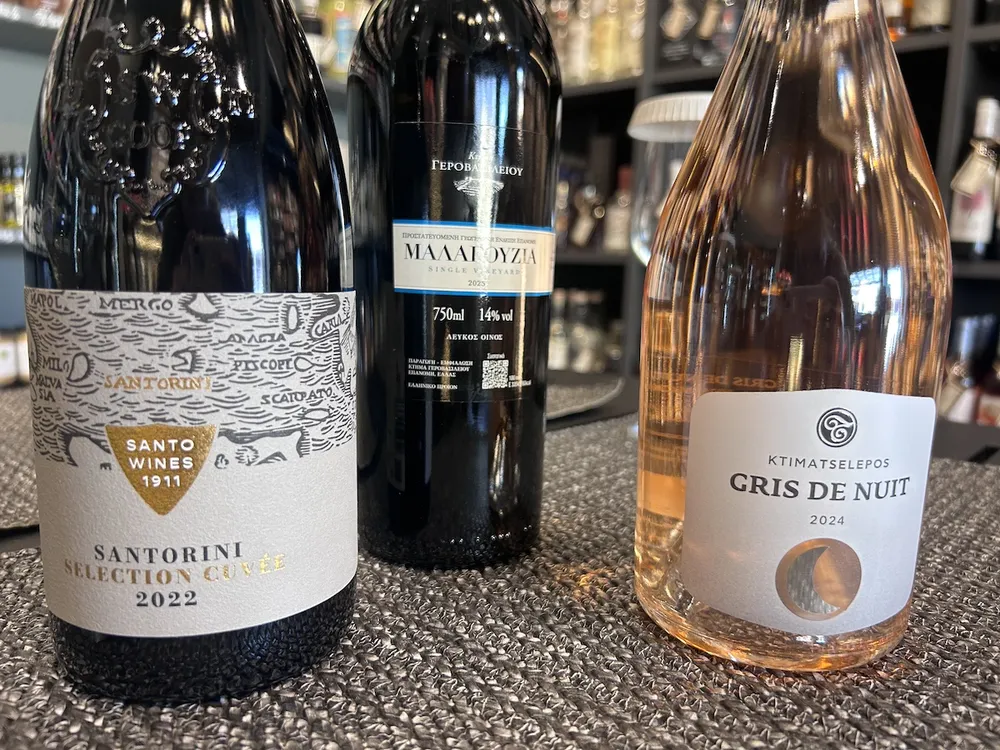
Gerovasileiou Malagousia, PGI Epanomi, Thessaloniki
Location: Kapesovo, Zagori, Greece
Grape: Malagouzia
Nose: White peach, floral, jasmine, chamomile and citrus
Acidity: Medium
Aftertaste: Long, pleasant and fruity
Food pairing: cheese, chicken, pasta, pizza and Greek salads
Gerovasileiou is one of the wineries responsible for the revival of Malagousia, a grape variety that had nearly disappeared entirely by the 1970s. The winery tracked down surviving vines and began working with the grape seriously in the 1980s. Today Malagousia is one of the most recognisable Greek white varieties, and this is a good example of why.
Santowines Santorini Selection Cuvée, PDO Santorini
Location: Santorini, Greece
Grape: Assurtiko
Nose: minerality, bright citrus and hints of tropical fruits
Acidity: crisp
Aftertaste: Long, clean and refreshing
Food pairing: Fat fish, chicken, pasta with white sauce, cheese and mild-flavoured meat
Santorini Assyrtiko is one of the great white wines of Europe, and it remains underpriced relative to what it offers. The volcanic soils of Santorini, known as aspa, are among the most mineral-rich in the world, and they produce a grape with a character that is entirely its own: bright citrus, hints of tropical fruit and a stony minerality that sits underneath everything and gives the wine its structure.
Tselepos Gris de Nuit, PDO Nemea, Peloponnese
Location: Peloponnese, Mainland Greece
Grape: Moscofilero
Nose: Red roses, red fresh fruits, strawberries, berries, cherries and Turkish delight
Acidity: Low
Aftertaste: Not long but refreshing with notes of white flowers
Food pairing: Asian cuisine, chicken, pasta, pizza, cheese
Moschofilero is a pink-skinned grape grown primarily in the high-altitude plateau of Mantinia in the Peloponnese. Tselepos is one of its most respected producers, and the Gris de Nuit is an interesting interpretation: a white wine made from a pink grape, giving it a faint blush colour and an aromatic profile that sits somewhere between a white and a rosé.
Thymiopoulos Earth and Sky, PDO Naoussa, Macedonia
Location: Naoussa, Macedonia, Greece
Grape: Xinomavraw
Nose: Bouquet of red fruits like raspberries, cherries, notes of sun-dried tomato, olive tapenade, violets and subtle spices
Acidity: Medium and vibrant
Tannins: Medium to high and delicate
Aftertaste: Long, persistent and evolving with a harmony of fruits
Food pairing: Red meat; beef and pork, Mediterranean cuisine, grilled lamb, risotto and pastas with red sauce or with game poultry
Xinomavro is a red grape of northern Greece and one of the most complex indigenous varieties in the country. The name translates roughly as "acid black", which gives you some idea of its character. Thymiopoulos is a young winery that has done more than most to bring Xinomavro to international attention. The Earth and Sky is their entry-level expression, but entry-level here means approachable rather than simple.
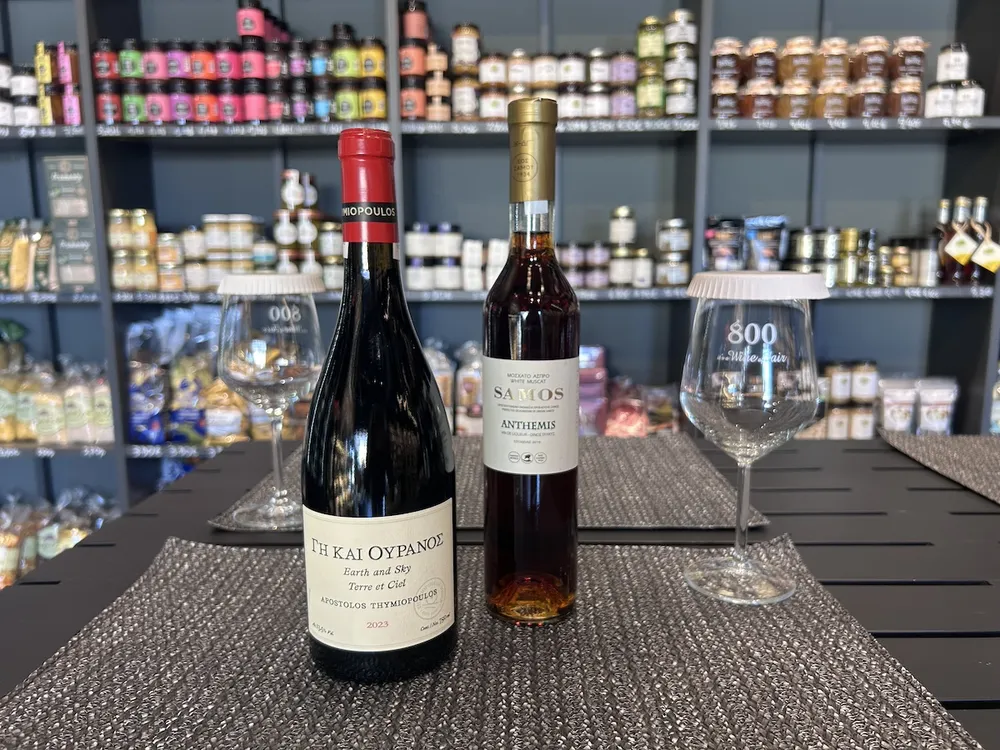
Samos Anthemis, PDO Samos, Aegean Sea
Location: Samon, Aegean Sea, Greece
Grape: White Muscat
Nose: Intense with aromas of dried fruits like fig, apricot, caramel, cocoa, honey, layers of nuts, coffee and sweet spices
Acidity: Well-balanced with the sweetness of the wine
Aftertaste: Long with flavors of cocoa, coffee and warming spices notes
Food pairing: This is a dessert wine best paired with baklava, creme brulee or chocolate mousse
The island of Samos has been producing sweet Muscat wine since antiquity. The Cooperative of Samos, which makes the Anthemis, has been operating since 1934 and represents the great majority of wine production on the island. The Anthemis is their prestige expression: a naturally sweet wine made from white Muscat grapes grown on the terraced hillside vineyards above the Aegean.
Greek Wine Beyond the Tasting
While Zagori does not have a significant wine-producing tradition in the way that Santorini or Naoussa does. The region has a culture of good eating and hospitality that makes wine an important part of any evening.
On Crete, where we also travel, the Dafnes PDO and Peza PDO regions produce wines from the Kotsifali and Vilana grapes that are worth seeking out.
In the Mani, viticulture is limited by the rocky, arid landscape of the southern Peloponnese, but the area around Nemea nearby produces some of Greece's best Agiorgitiko reds, sometimes referred to as the Blood of Hercules.
For anyone wanting to read more, Konstantinos Lazarakis's book The Wines of Greece is the most comprehensive guide in English, and Jancis Robinson's Oxford Companion to Wine covers the main varieties with characteristic precision.
We travel to Zagori, Crete and the Mani in Greece, where there is plenty of wine always partnered by delicious, hearty Greek food. To find out more about what each cycling trip involves, visit our Greece cycling holidays page or get in touch.
Latest Stories
Read all stories-

Vangelis: Slow Cyclist Guide in The Mani Peninsula, Greece
-

South Africa FAQS - Everything You Need to Know About Cycling in the Karoo
-

Watch: Our Karoo Webinar with Jaco and Katja
-

The Best Books Written by Adventurers and Explorers
-

The Quiet Case for the E-Bike
-
Europe by Train: The Best Way to Reach a Slow Cyclist Trip