The Myths of the Mani Peninsula, Greece
The Mani Peninsula has long been a feature of myths and legends; its stories and history are unlike anywhere else in Greece. We've written before about the region's turbulent human history, Spartans, Ottomans and tower-house feuds, but there are older tales beneath that predate even Sparta. The ancient Greeks believed that at the very tip of the Mani lay a door to the underworld. It's one of the reasons this "world's edge" corner of the Peloponnese has cast such a spell over everyone from writers to filmmakers.
The cave at the end of the world
Follow the Mani far enough south, beyond Areopoli and the village of Kokkinogia, and you reach Cape Tainaron, also known as Cape Matapan, the southernmost point of mainland Greece. It's a wild, wind-scoured place: a lighthouse, a scatter of ruined stone, and a sea that meets from two directions at once, the Messenian Gulf on one side and the Laconian on the other.
The ancients believed a cave here was one of the entrances to Hades, the Greek underworld of the dead, guarded by Cerberus, the three-headed hound born of Echidna and Typhon. Two of Greek mythology's most famous stories are set here: Heracles descended here for his twelfth and final labour, sent by King Eurystheus to drag Cerberus up into daylight. And, according to the myth, it is where poet Orpheus went searching for his wife Eurydice, charming his way past Cerberus with his lyre, only to lose her again when he turned to look back too soon.
Above the cave stood a temple to Poseidon, where the poet Arion, having been thrown overboard by pirates, is said to have sung so beautifully that a passing dolphin carried him safely to these shores. A bronze statue of Arion astride his dolphin still marks the spot.

Mani and The Odyssey Film
Mani's stone towers and dry hills have an otherworldly quality that lends itself to cinematic landscapes. Christopher Nolan's The Odyssey, shot across Greece, Italy, Iceland, Morocco and Scotland with Matt Damon as Odysseus, arrives in cinemas on 17 July 2026. Many of the Greek filming locations were in the Peloponnese, including Nestor's Cave, Voidokilia Beach, Almyrolaka Beach, Methoni Castle and Acrocorinth, just up the coast from where we cycle in the Mani.
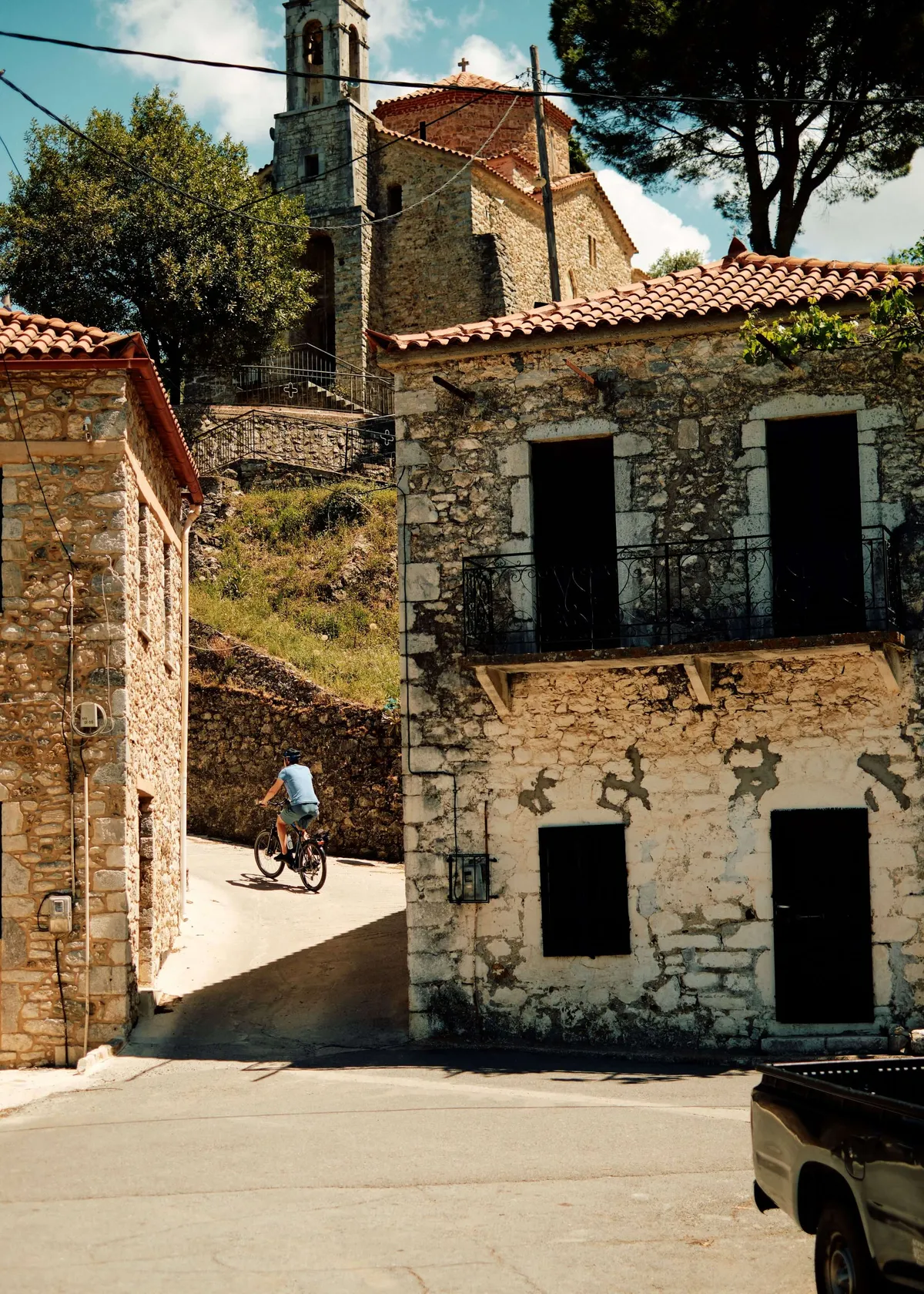
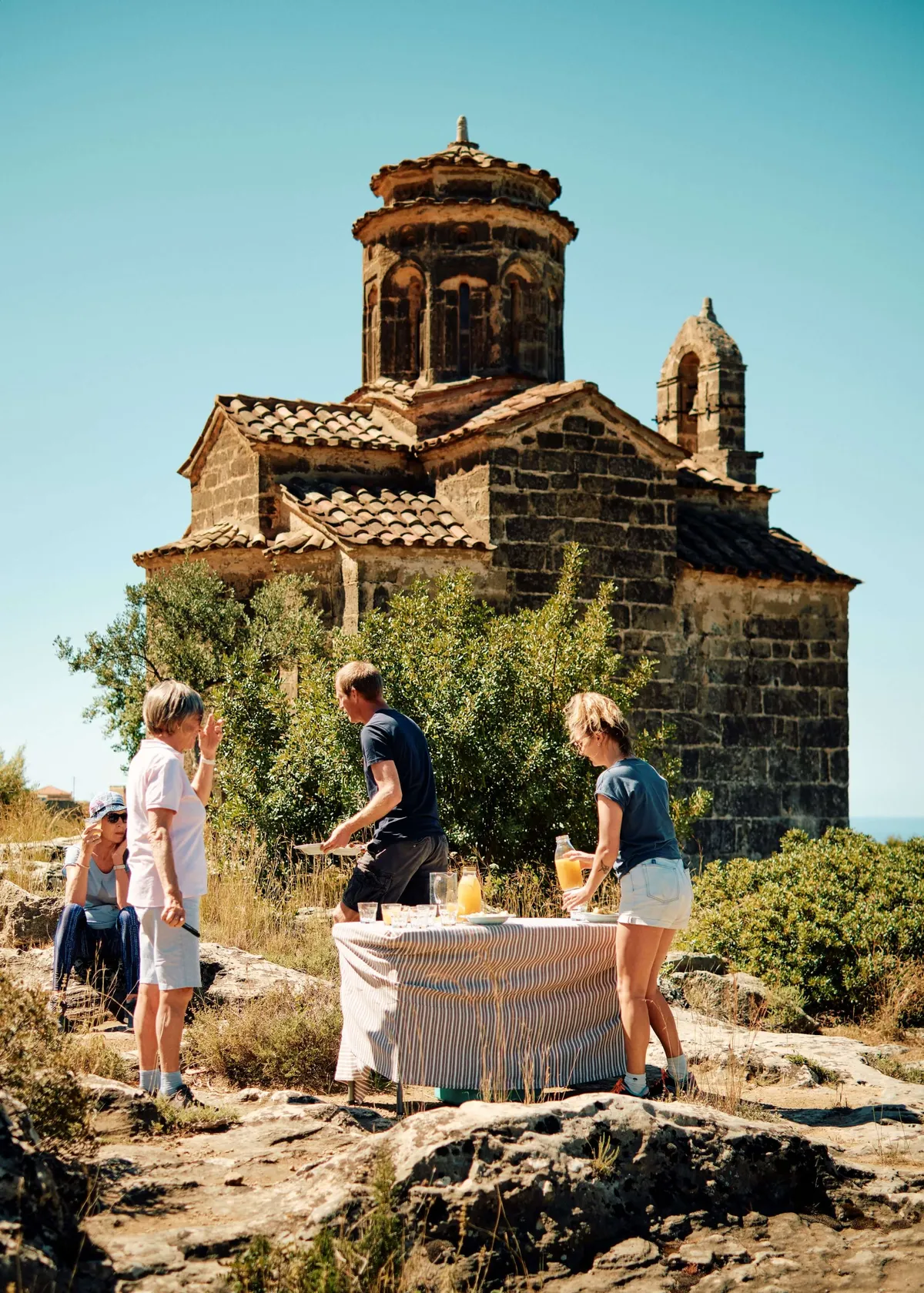
If Homer and Hades have piqued your curiosity, our round-up of the best books about the Mani is a great read. Patrick Leigh Fermor's Mani remains the definitive portrait of this strange, self-contained corner of Greece, myths and all. To learn more of the history of this dramatic region- Spartans, Ottomans and tower houses our piece on the history of the Mani Peninsula fills in the rest.
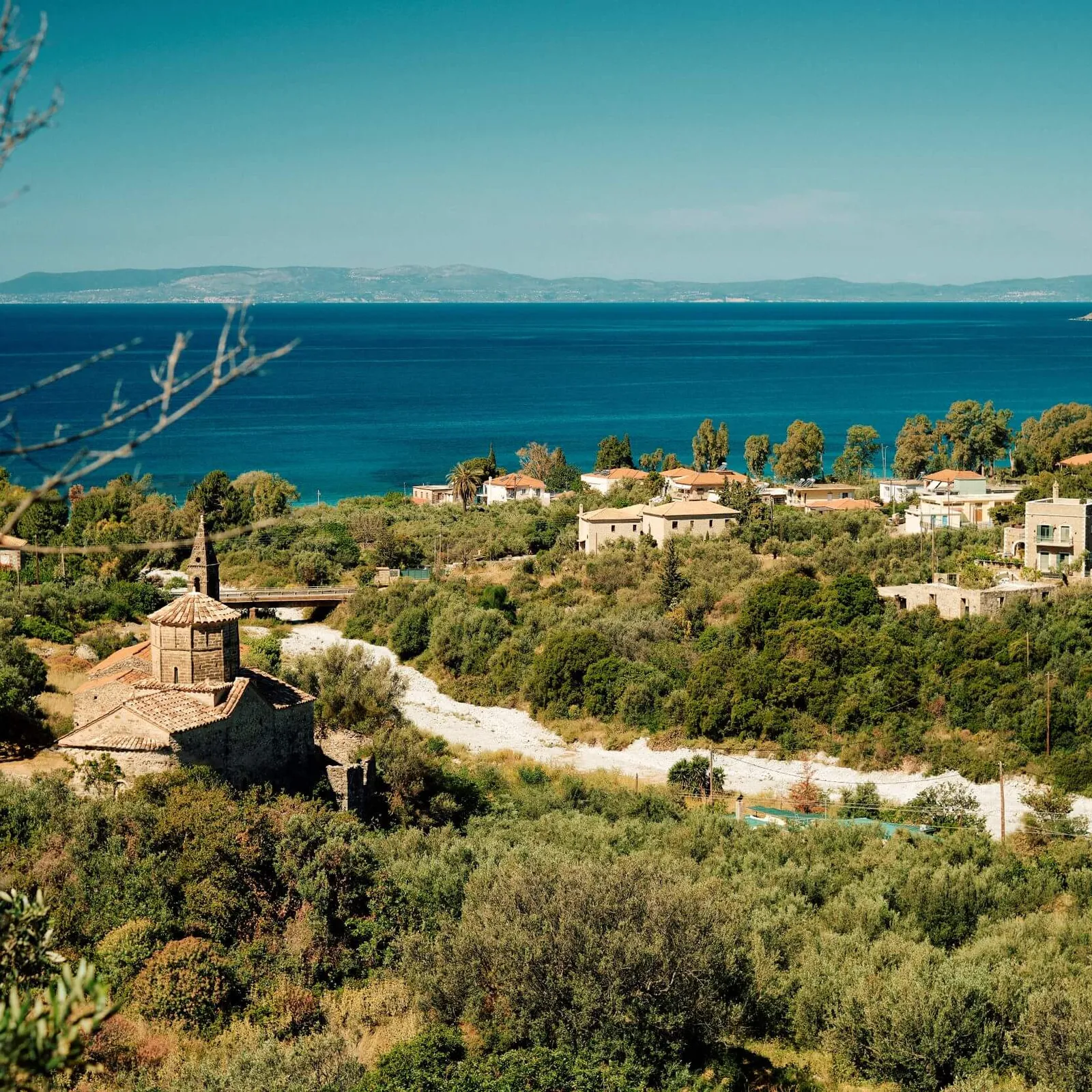
Cycle quiet coastal roads between Kitta and Kardamyli, walk the shepherds' paths above the Deep Mani and finish your evenings with a glass of Peloponnese rosé as the sunsets. Discover our Mani cycling holidays.
Latest Stories
Read all stories-
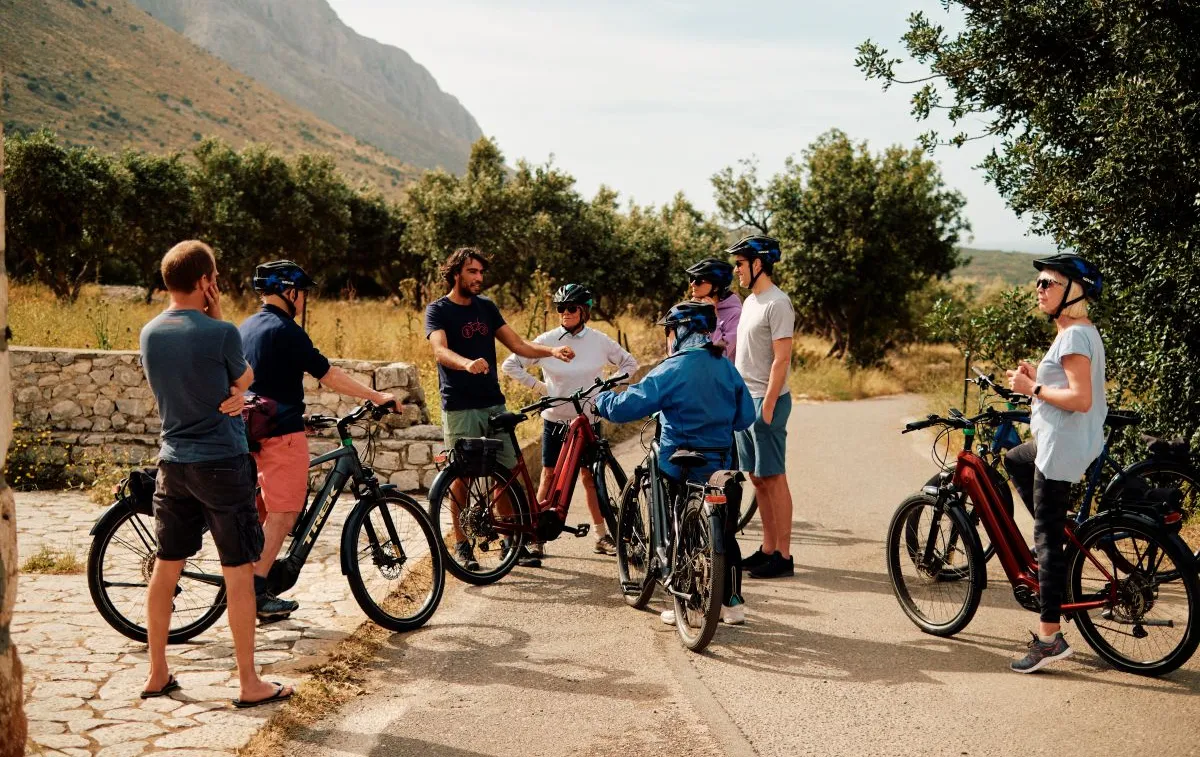
Vangelis: Slow Cyclist Guide in The Mani Peninsula, Greece
-
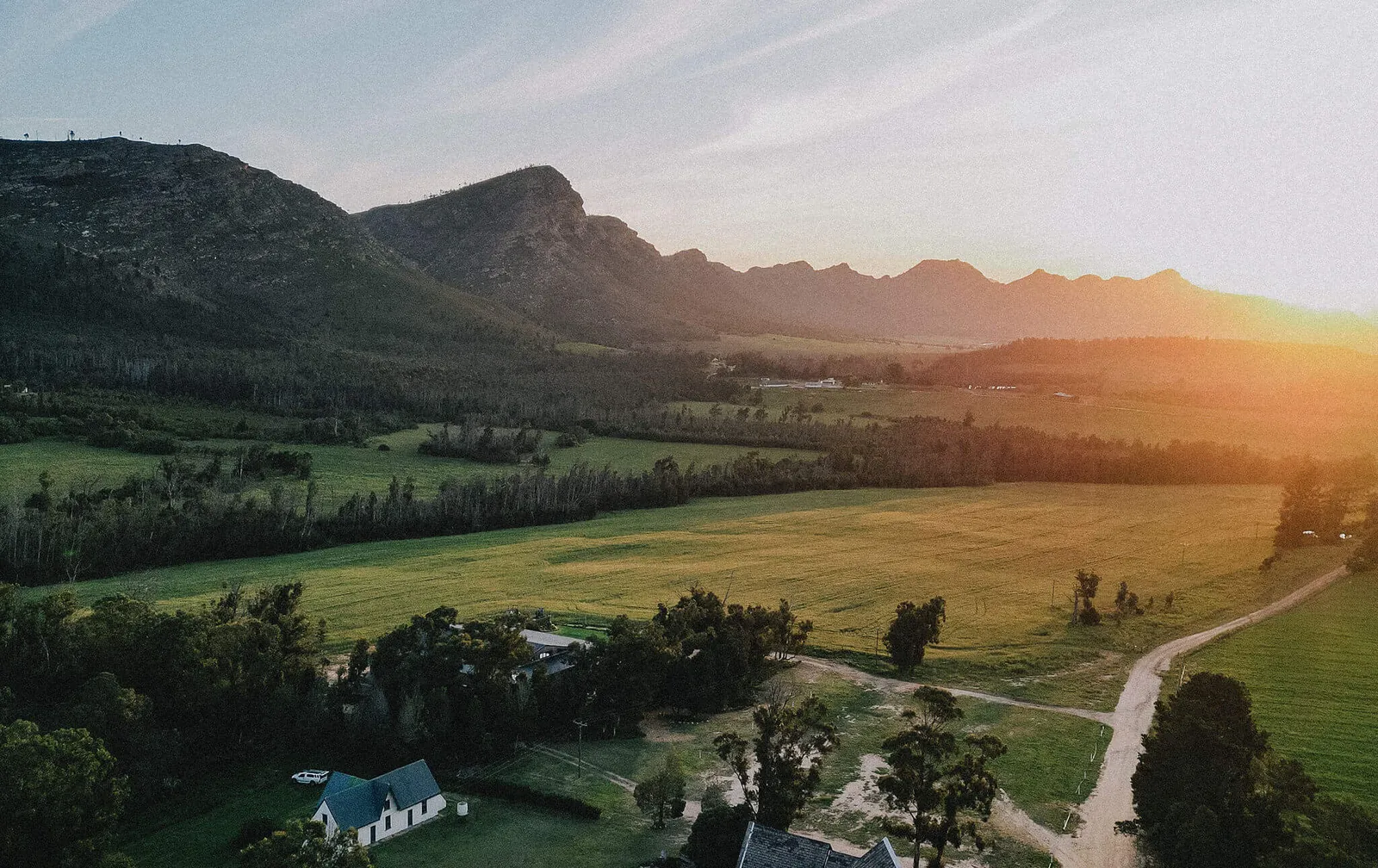
South Africa FAQS - Everything You Need to Know About Cycling in the Karoo
-
Watch: Our Karoo Webinar with Jaco and Katja
-
The Best Books Written by Adventurers and Explorers
-

The Quiet Case for the E-Bike
-
Europe by Train: The Best Way to Reach a Slow Cyclist Trip