Enchanted Transylvania - The Women Who Welcome Us Home
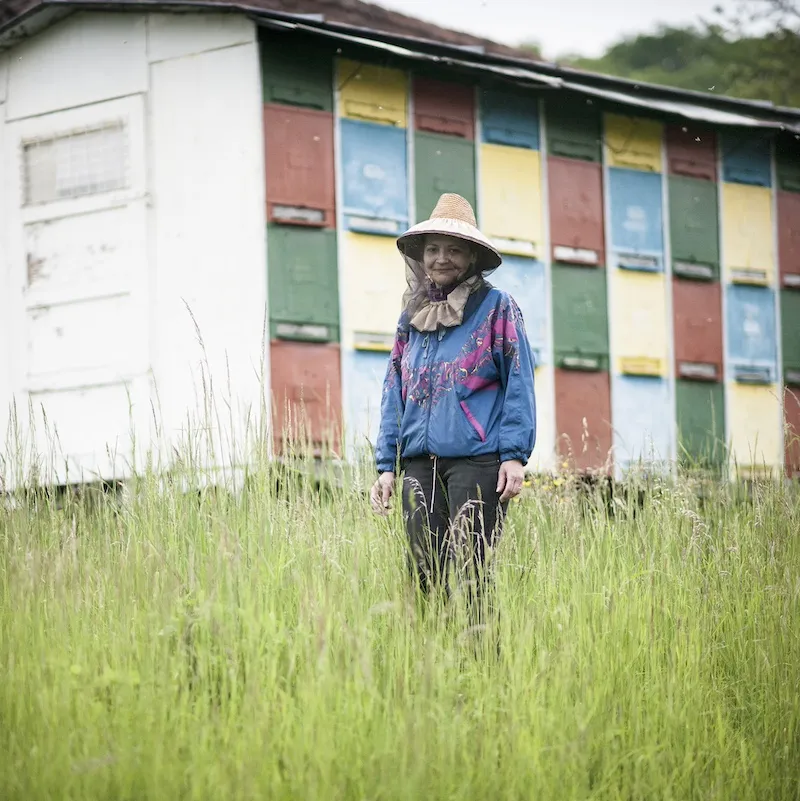
Transylvania is a beautiful and unique region of Romania, and we find that its true character is best revealed through the homes that welcome us. As we look ahead to our women-only trip this spring, we want to introduce you to a few of the hosts who make these journeys possible. These women are the heart of our experience, opening their doors to share not just their tables, but their family histories and heritage. Their stories are central to the journey we have planned, and we asked each of them to share a glimpse of their life with The Slow Cyclist community.
Donata
On our trips, we're lucky enough to stop for lunch with Donata. Originally from the Netherlands, Donata first visited Romania in 1996, hitch-hiking from Amsterdam with her partner, Marco, who is also a Slow Cyclist guide, while they were anthropology students. The connection they felt to the landscape was immediate, leading them to buy a home here in 2001 and eventually move their lives to the Transylvanian countryside.
What made you decide to move to Transylvania?
I first visited Romania in 1996 after meeting Marco at Amsterdam University. We hitch-hiked from Holland and fell in love with the country, returning often until 2001, when we decided to find a permanent base here to connect with locals and traditions.
What do you like most about living in the countryside here?
The countryside encourages a slower pace, allowing me to appreciate the seasons to the fullest. Life is vibrant and blooming in the summer, then slow and introspective in the winter; I find this cycle sets a perfect rhythm for life.
Was it difficult to change from city life to rural life?
Adapting could be difficult at times, especially as we were only in our late twenties when we began the transition. However, because we moved gradually and often returned to Amsterdam and The Hague, it was a gentle process. As I get older, I appreciate the rural lifestyle more and more.
What food do you grow or collect from the land?
We have always foraged for wild garlic, and I love serving wild garlic soup to our guests. Our garden provides lettuce and tomatoes, and we also manage a vineyard of 400 vines from which we make our own wine and grappa.
What is your favourite meal that you cook with local ingredients?
My favourite is my wild garlic soup, which combines my own discoveries with traditional Romanian techniques. I also enjoy using tarragon from the garden in stews, as well as making classic dishes like goulash or sarmale.
What was the biggest challenge when you first moved here?
Learning the language was the primary hurdle, along with adapting to a different cultural approach to time. Punctuality is viewed differently here; people may arrive an hour late, which was initially frustrating but eventually felt quite liberating. I had to learn to accept that things might simply run behind schedule.
How have local people welcomed you?
The community has fully accepted us. It took time for everyone to adjust to the different habits and culture we brought from Amsterdam in 2001. As Romania has opened up over the years, we have grown alongside our neighbours, reaching a wonderful point of mutual understanding.
Theodora
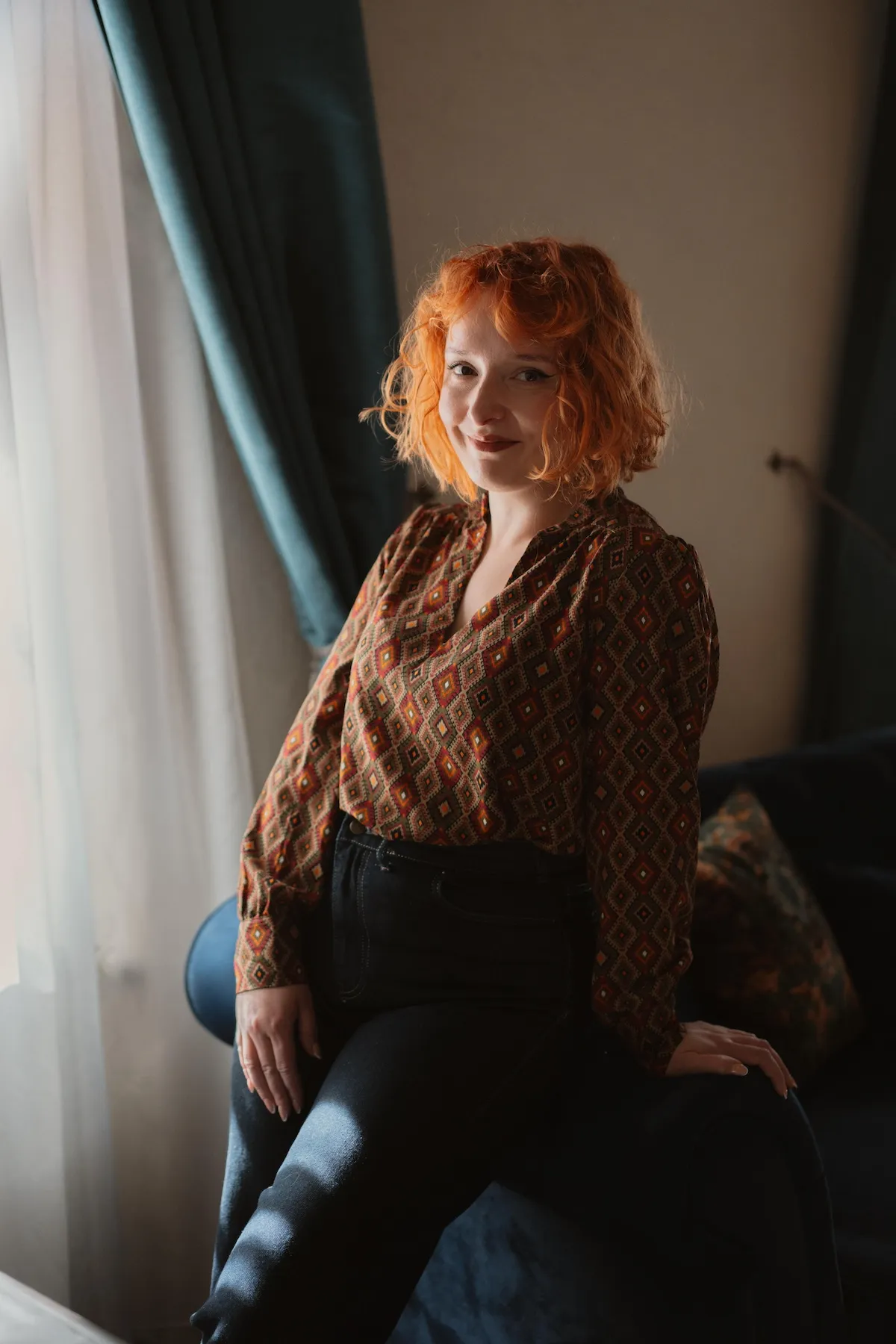
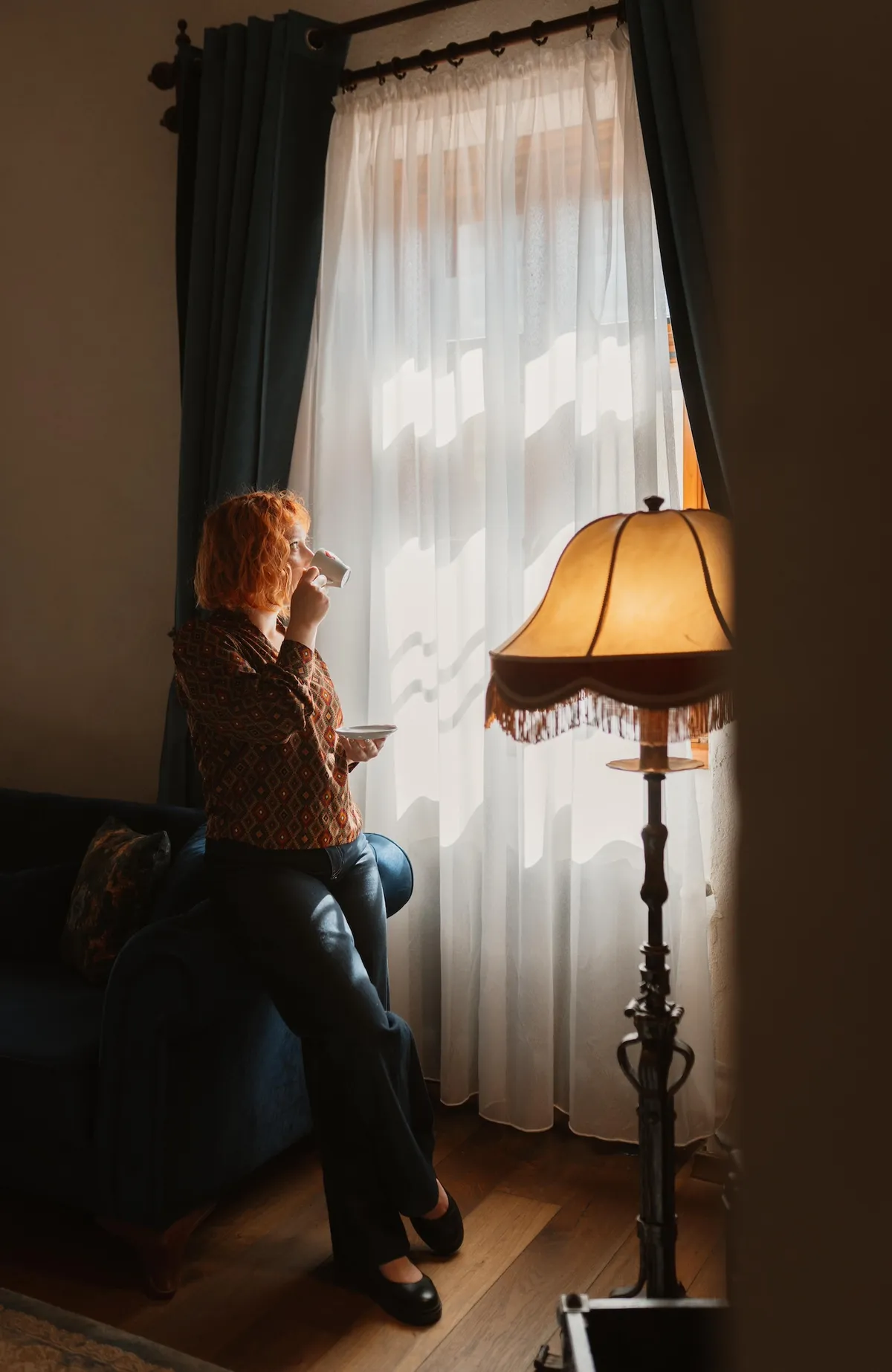
Later in our journey, we head toward the towers of Sighișoara to dine with Theodora, pictured above in her home. She was raised in rural Romania, but spent seven years living in Bucharest. She told us about what drew her back to her childhood home, and what makes the food in Transylvania so special.
Can you tell us about your home near the citadel in Sighișoara?
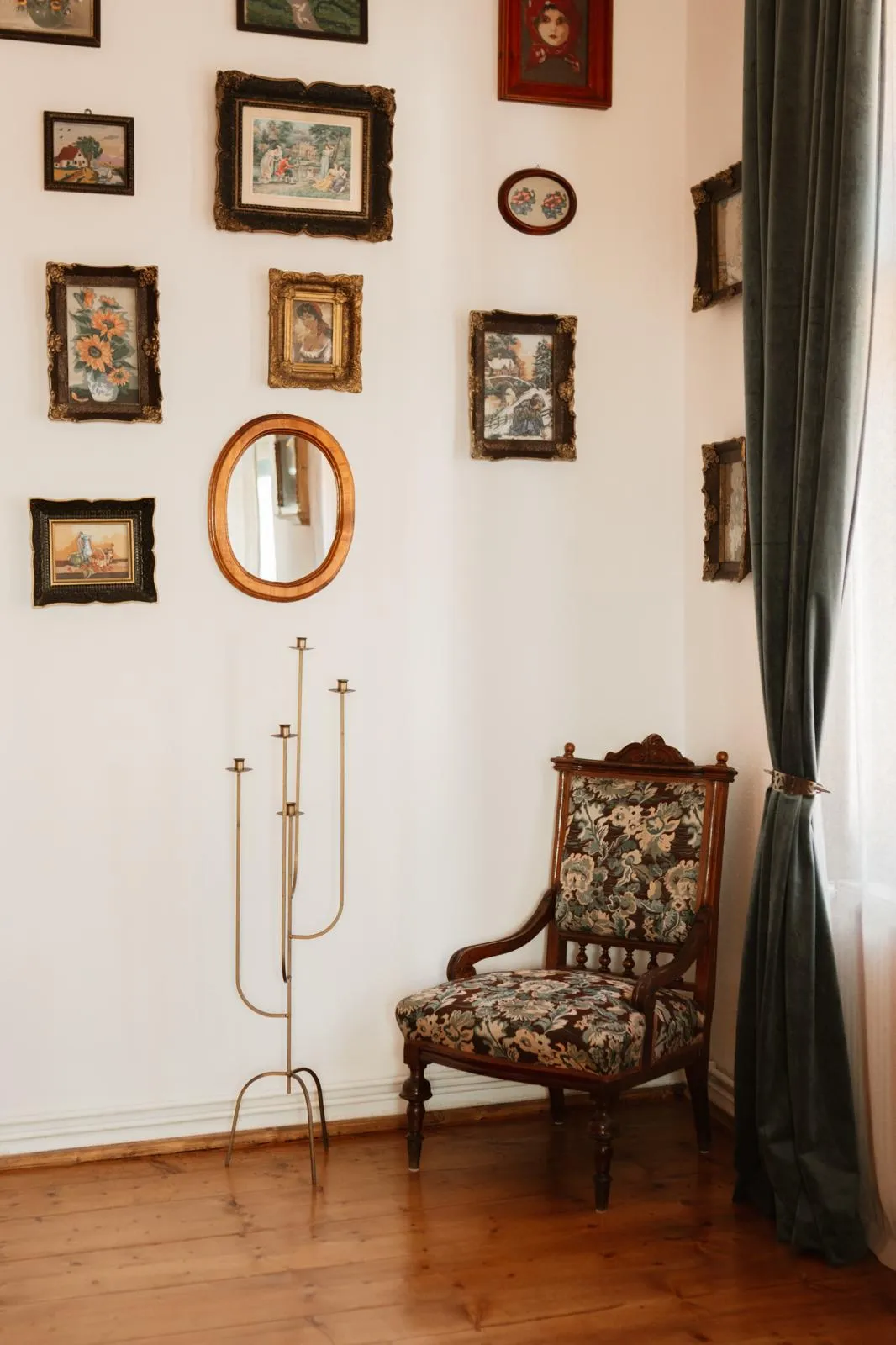
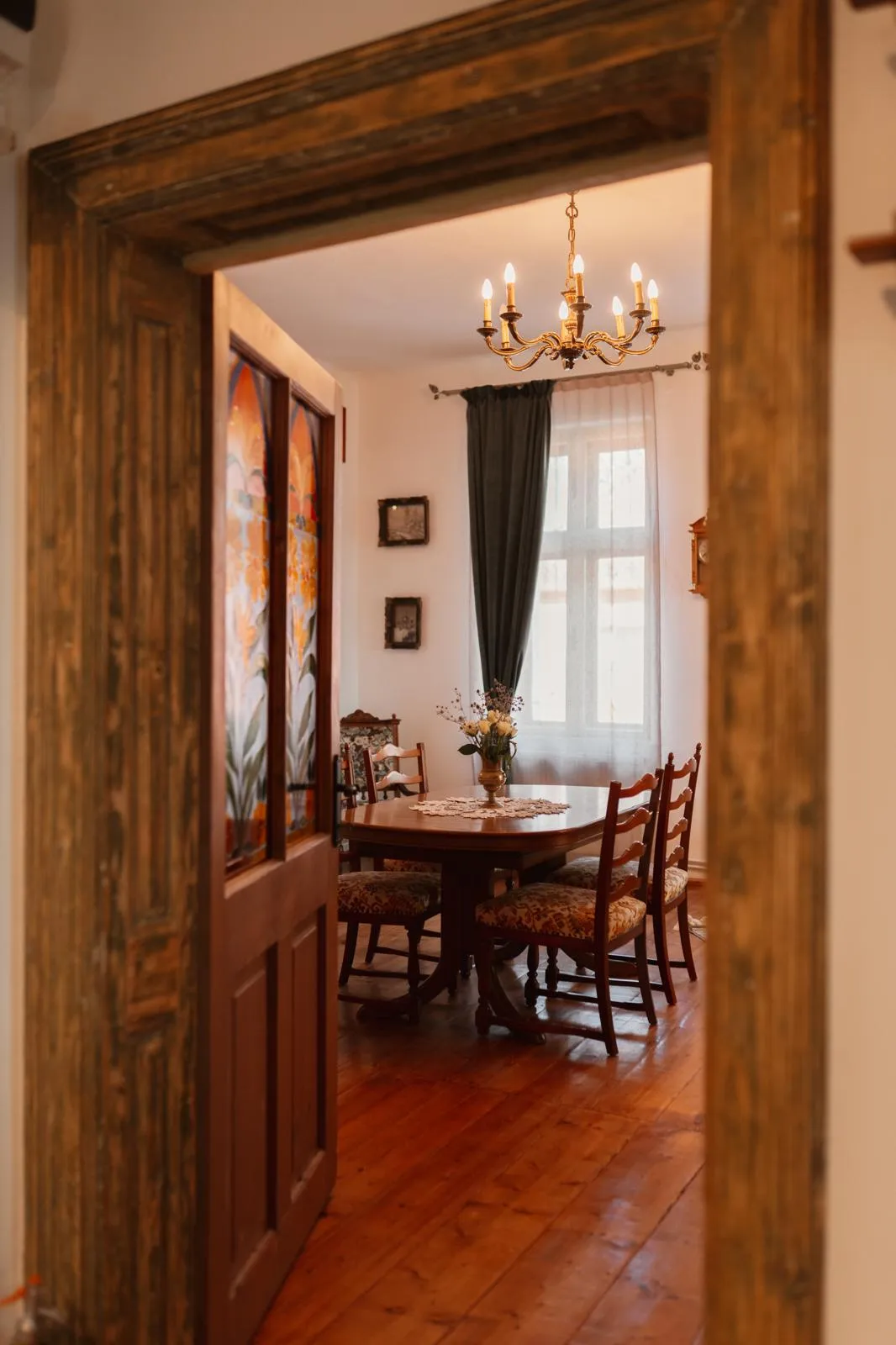
Built in 1926 for the Breithofers, Saxon cloth dyers who worked in the cellar, this house later belonged to a multilingual priest and artist whose forgotten paintings now hang alongside our own gathered treasures. With nearly a century of history held within these walls, I find that it is through welcoming guests that the house truly comes to life.
Growing up beneath Sighișoara’s citadel felt like living inside a story, its cobbled rhythm and ancient facades shaping my eye for detail and curiosity for the world. Though I found echoes of home elsewhere, I was eventually drawn back from Bucharest not just by these childhood streets, but by the surrounding land, the rolling hills, deep forests, and untamed meadows where the morning stillness is carried on birdsong.
What traditional Romanian dishes are your favourite?
These days, I find myself returning to the food of my childhood: creamed wild mushrooms, sarmale with polenta, and potato soup with tarragon. Humble meals like garlic bread, served alongside a salad of garden tomatoes with thyme, and rhubarb sponge cake with toasted meringue - sweet, tart and familiar.
What makes Romanian food special for you?
Romanian food is, at its core, hearty and deeply satisfying. It grew out of necessity, making the most of what was at hand: cabbage, beans, and potatoes. In homes like my grandmother’s, where meat was rare, traditional recipes were born of resourcefulness, creativity, and a deep respect for whatever was available.
Are the recipes you use old family recipes?
Our recipes reflect the diverse cultures that have co-existed in Transylvania for centuries. As a family of Romanian, Hungarian, and Saxon heritage, our cooking naturally blends these influences. There is rarely a single source for a dish; my mother’s rhubarb and strawberry pie came from a Saxon neighbour, while the habit of adding paprika to almost everything is distinctly Hungarian. In our home, you will find a bit of everything, which makes the food feel rich, colourful, and alive.
Rozi
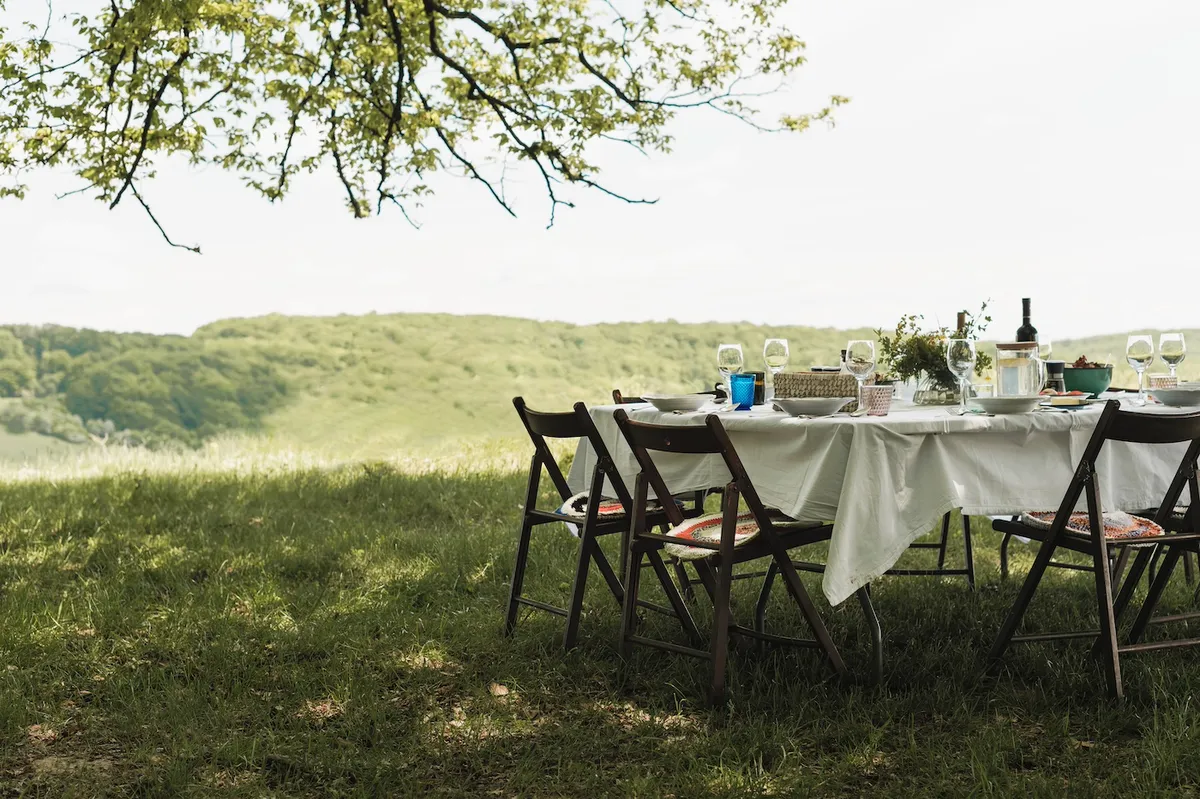
One evening on our trip in Transylvania we gather for a barbecue in the village of Poieni, hosted by Rozi and her family. Rozi was kind enough to share her beautiful story with us.
Can you tell us about your apple orchard and what you enjoy most about welcoming guests to share dinner with your family?
In 1988, under the communist regime, my husband was barred from working in our hometown, forcing us to move. It was a difficult transition, but when he asked where we should go, all I said was that we needed to find a home with a garden.
We settled in the village of Poieni, Romania. Though the house was modest, I was captivated by the land: a splendid orchard of blooming trees, dew-covered grass, and fresh air. It was exactly what I had longed for.
In the forty years since, our children have grown up planting, pruning, and harvesting alongside us. My greatest joy is sharing this beauty with others. After the day's work is done, our family gathers to prepare dinner at sunset, accompanied by birdsong and the evening silence. I take great pride in my family, and we are happiest when our guests leave with cheerful nostalgia for the time spent in our orchard.
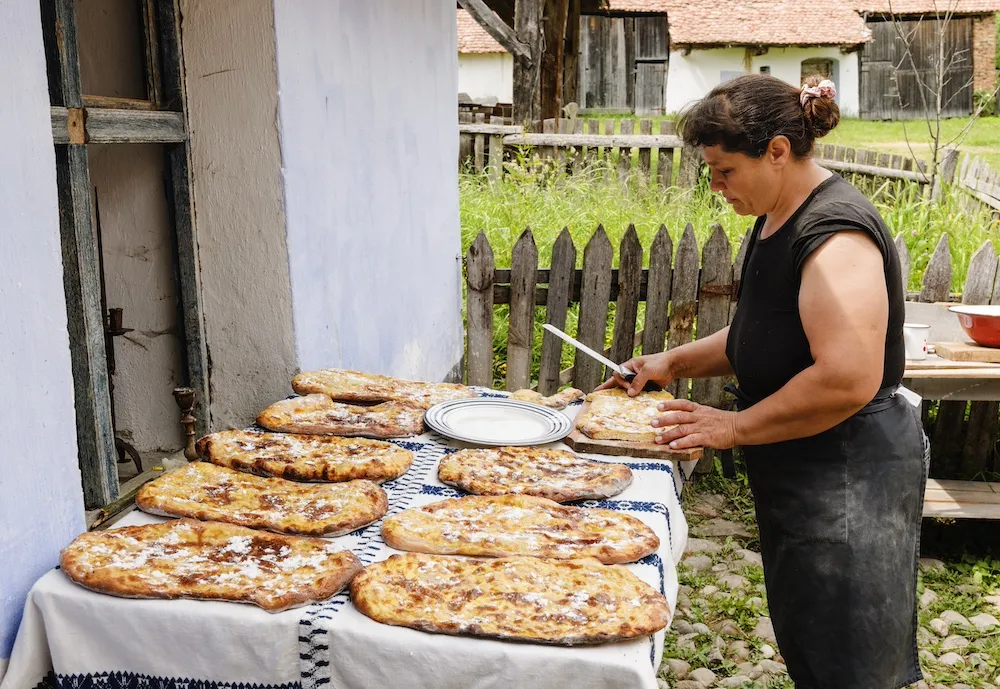
These women are the heart of our cycling trips to Romania, and many of them have had a vital part in creating our Enchanted Saxon Transylvania By Women, For Women journey this autumn. In celebration of this inaugural women-only slow cyclist journey, we interviewed Suzi, Romania's first-ever female bike guide, as well as two other pioneering women blazing the way in Romania.
Inspired to join us in Transylvania for a journey of shared cultural experiences and incredible cycling? Meet like-minded women, explore hidden landscapes, and create memories that last a lifetime.