An Interview with Lucy Abel Smith
Earlier this year, our founder Oli Broom sat down with a long-standing friend of The Slow Cyclist and a pioneer of travel in Central and Eastern Europe, Lucy Abel Smith. A celebrated author and historian, Lucy’s connection to the region began long before it was on the tourist map; she first ventured behind the Iron Curtain in 1972 and later penned the first post-communist guidebook to Prague. From leading tours in the 1980s to becoming an early explorer of Albania and Kosovo, Lucy eventually found a second home in Transylvania, where she saved a derelict 18th-century Saxon house from ruin.
Beyond her work as a consultant and lecturer for the British Museum and the V&A, she has a remarkable gift for bringing people together through the arts. In 1992, she founded the biennial Fresh Air sculpture show in Gloucestershire, and more recently, she established the Transylvanian Arts Festival, an event that captures the spirit of the landscapes we love to cycle through. Lucy has also welcomed The Slow Cyclist guests into her home and garden for our Cotswold experience days. In this interview, Oli and Lucy discuss her lifelong passion for the art, architecture, and enduring culture of Eastern Europe.
Hi Lucy, thank you for chatting with me today. Before we get into discussing the Transylvania Arts Festival, let's talk travel. You've just been to South India; had you been before?
Never in my life. I went to South India with a very dear friend who knows the country well. We visited Mumbai, Cochin in Kerala, and we also went to a place called Matheran. At first, I couldn't think why I knew the name, until I remembered my great-grandfather, originally from Govan, Glasgow, as a young man used to run guns into the southern states from Cuba, and ended up running the port in Bombay. He went up to Matheran in his early twenties, and when he came back and got married, he called his enormous house in Glasgow 'Matheran'! I'd completely forgotten. It reminded me of the depth of family connections to places you've half-forgotten. It was rather nice to be reminded.
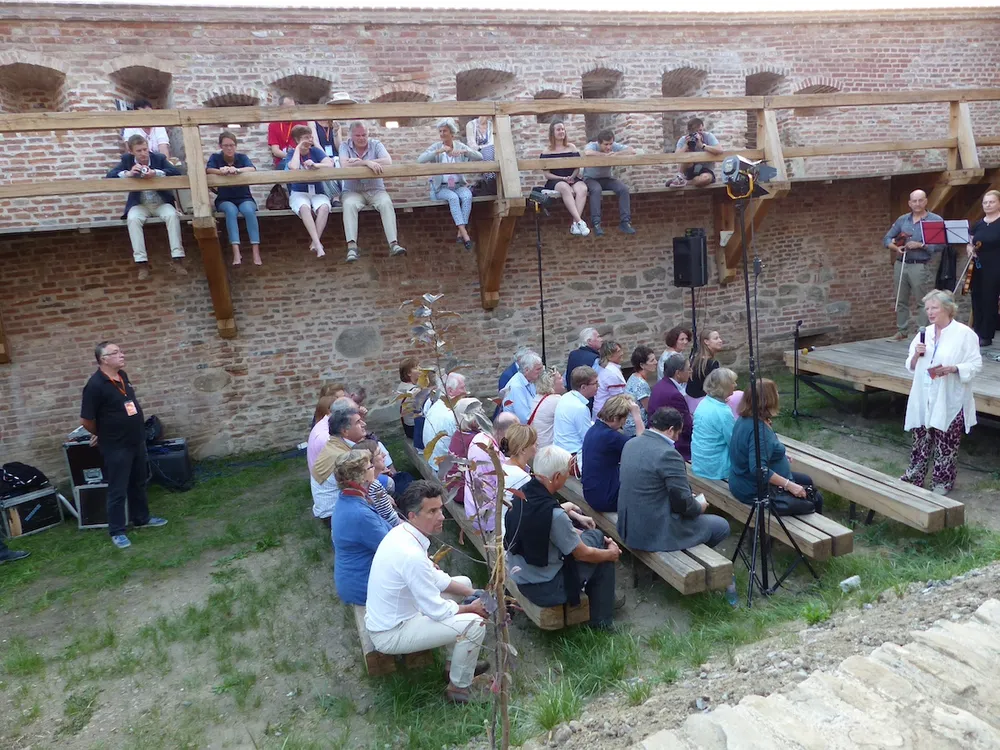
What a story. Back to Romania and the Transylvanian Arts Festival. You founded the festival in 2013 - what was it that inspired you to create such an event?
I was already organising programmes for my tours of Romania and for organisations like the V&A and the Royal Academy of Art. But I suddenly felt, as someone with a house in Romania, that I was in an extraordinarily privileged position to start something there. The other thing was that I dislike literary festivals in general, so I knew what I didn't want. I didn't want to divide the speakers and the audience. I didn't want to cherry-pick speakers because they've got a book out. I wanted everything to be connected: music, poetry, food, politics, history. I wanted everyone, speakers and patrons alike, to travel and eat together. That's how extraordinarily good friendships have been formed. It's rather like your trips, actually. It creates bonds.
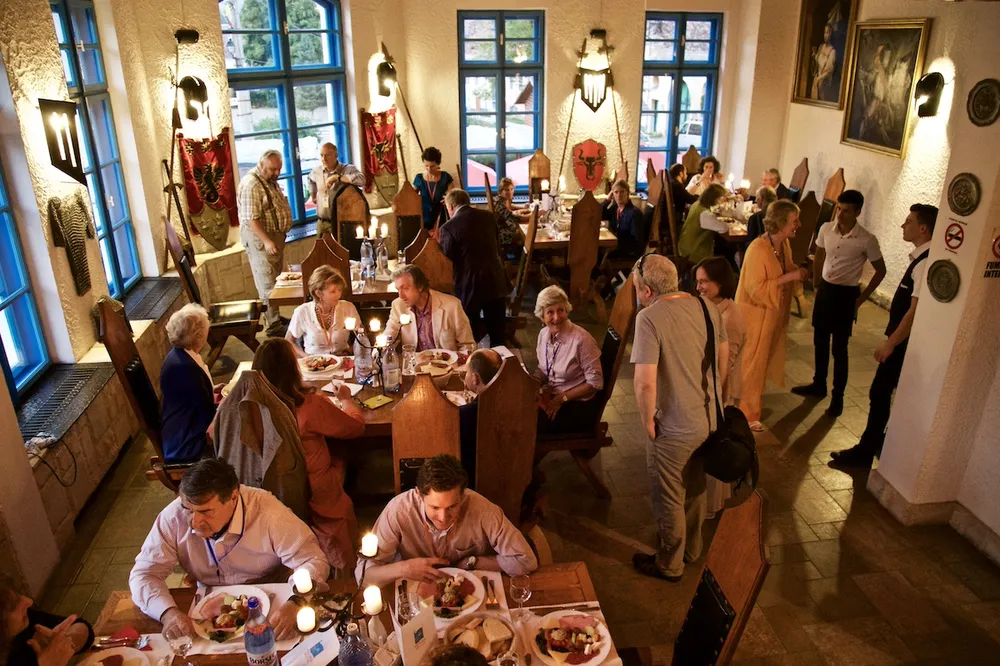
What made you choose Romania specifically? For those who haven't been there before, why do you think this style of event works there, and who have been your most memorable speakers to date?
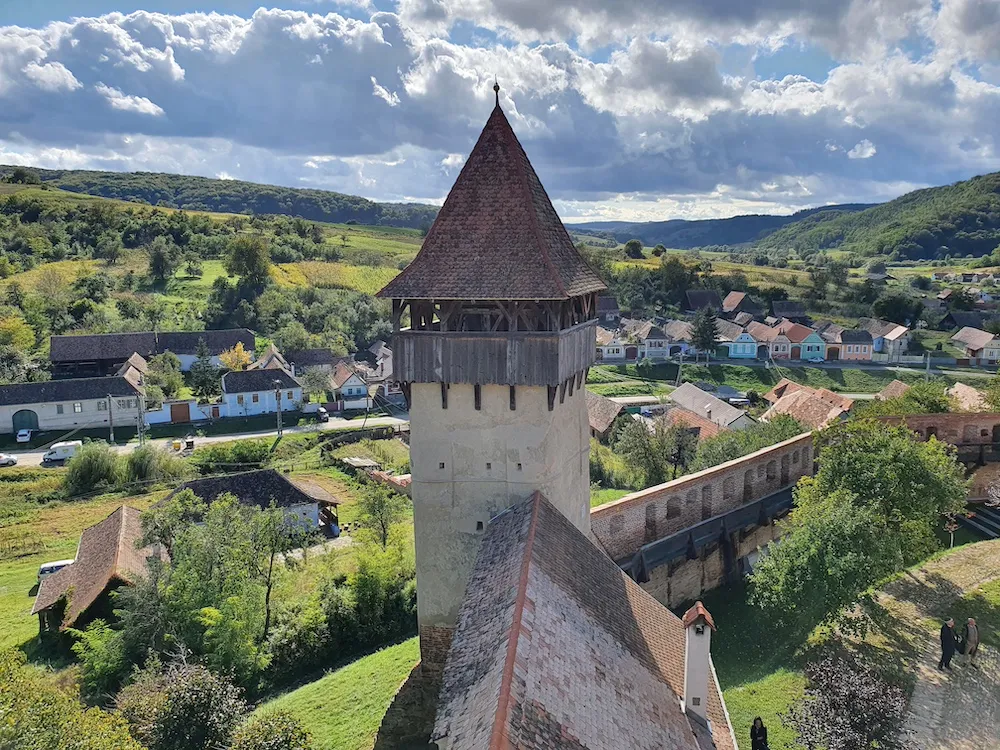
As a location for the book festival, Transylvania works because it's such a culturally rich country. You've still got this split between Transylvania and the rest of Romania, so you've got an excuse to bring in everything from the Transylvanian rugs in the Saxon churches, to the Ottomans, to Maria Theresa. The cultural material is extraordinary, and sometimes very surprising; things just come out of the woodwork.
In the early days, talks about Count Miklós Bánffy, who wrote The Transylvanian Trilogy, were always memorable. We had a relative of his speak once; she was very nervous, so I just told her to talk about something no one else could. She spoke about watching her mother type out, with carbon paper, the translations of her father's trilogy. There wasn't a dry eye in the house.
What an incredible moment. What's on the programme for 2026's Transylvanian Arts Festival?
This year at the festival, we've got BBC's Nick Thorpe on his latest book, How Wild is My Wilderness, Richard Bassett talking about the discovery of the Patiala diamond, and Maria Pakucs talking about the Transylvanian towns, Martyn Rady, whose great book is Central European Kingdoms; he's going to talk about how extraordinarily stable Romania now looks, and about Wallachia, Moldavia, Bukovina, and the Ottomans.
On Saturday, we're moving out to Somartin, which has a wonderful Art Deco village hall built by Fritz Balthes. A Romanian-German couple there have restored the church, the town hall, and the school. We'll have two lectures on the architect, plus one on Baron Nopcsa, a really extraordinary man of the early twentieth century.
Sunday is a whole day of royalty: Queen Marie and the Saxe-Coburg-Gotha connection with the outstanding curator from Coburg; a speaker from Peleș Castle; as well as Nicholas of Romania, talking about his book on his grandfather, and then a programme of Queen Elisabeth of Romania's poems set to the music of the composers she sponsored. I've had to hire a grand piano for that!
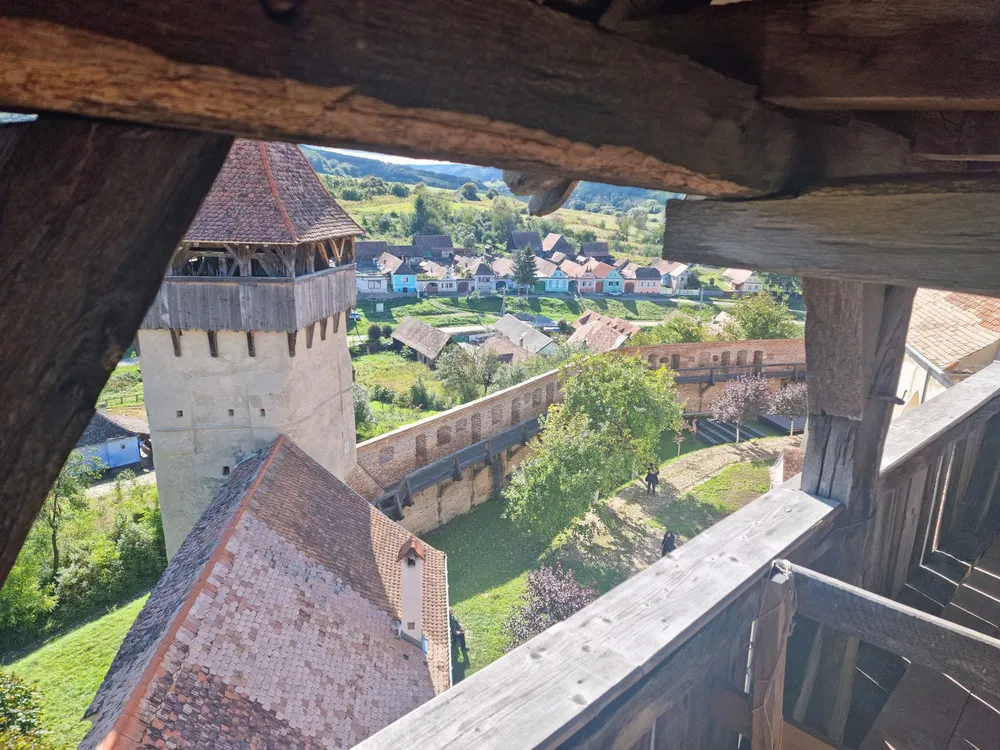
What a line-up - if there's one thing I love about the festival, it's that there's only ever one talk at a time. Everyone's in the room together, and you never miss anything, it's great that the whole community gets involved.
That's the rule, yes. Although we also run programmes for the children in the village at the same time. Any extra money goes to a pro-Richiș children's charity. We try to involve the local community as much as possible. After all, we are the only festival that actually takes place in these villages.
Could you tell us more about Richiș? What was it about the village that made you buy a house there in the first place?
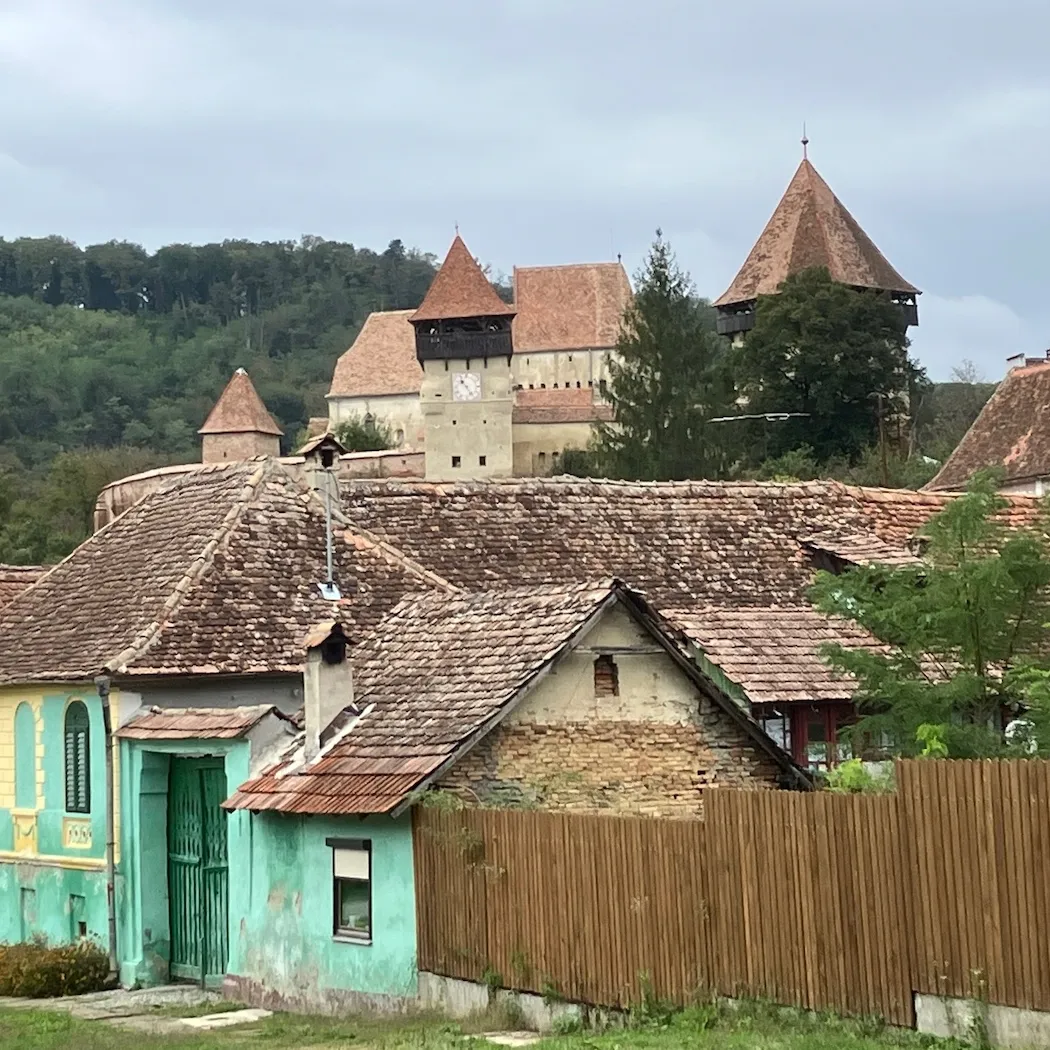
I was doing tours with the British Museum Society, lecturing on the painted churches and the Gothic Saxon heritage of the region. And I looked around and thought, I don't know any country so beautiful. Then I was approached by the Mihai Eminescu Trust. They asked if I would restore a house in this very beautiful village, with proper lime and plaster. That was twenty-five years ago. And that's my story.
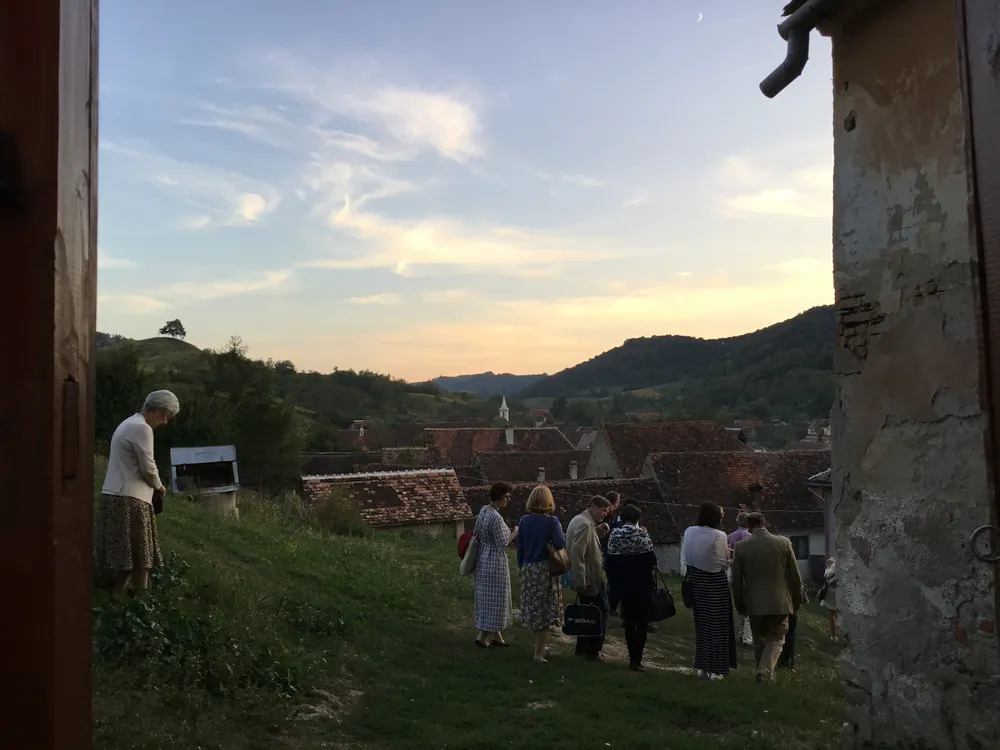
What do you think of the Saxon lands now?
There's bound to be change. I'm afraid the British loved the romance, but it was a romance really caused by poverty. I'm very glad that more money is coming in. I am upset, though, by some of the influence, not all good, that's coming into the Protestant churches. But I don't know how much one can do about it. I have some concerns about solar panels and the carving up of the landscape with fencing. That's the tricky one.
Lucy, thank you. It's a privilege to have you involved with The Slow Cyclist, and I hope we send a few more people your way this year.
I jolly well hope so too.
Lucy Abel Smith's Transylvanian Art Festival takes place in Richiș and the surrounding Saxon villages in 2026. If you're curious, we run a day with the festival as part of our Women-Only Transylvania trip. For details on Lucy's Cotswold walks with The Slow Cyclist, or to find out more about the festival, get in touch.