10 Reasons to Visit Transylvania: An Insider’s Guide
Mention Transylvania to the average person and their mind likely conjures images of bloodthirsty vampires, prowling wolf packs and gothic castles clinging to craggy, forested cliffs. While Bram Stoker’s Dracula put this corner of Central Romania on the map, the reality is far more enchanting and varied than the stories suggest.
There is no better time than now to experience this remarkable region. Transylvania is a land where extraordinary cultural heritage meets vast, unspoiled natural beauty. Here, enchanted Saxon villages are cradled by the Carpathian Mountains, and farm-to-table isn't a trend - it's a way of life. Friendly locals offer authentic Romanian cuisine, with ingredients sourced directly from the flower-filled meadows and ancient orchards that surround their homes.
Our Local Connection
Our connection to this landscape is a personal one; our founder, Oli Broom, spent six months living in the heart of Transylvania in 2016. Between hosting cycling tours, he describes the region as "one of the loveliest, most light-filled and magical places in Europe." Here are our top ten reasons you should visit Transylvania this year.
1. Europe’s Last Great Wilderness: The Carpathian Mountains
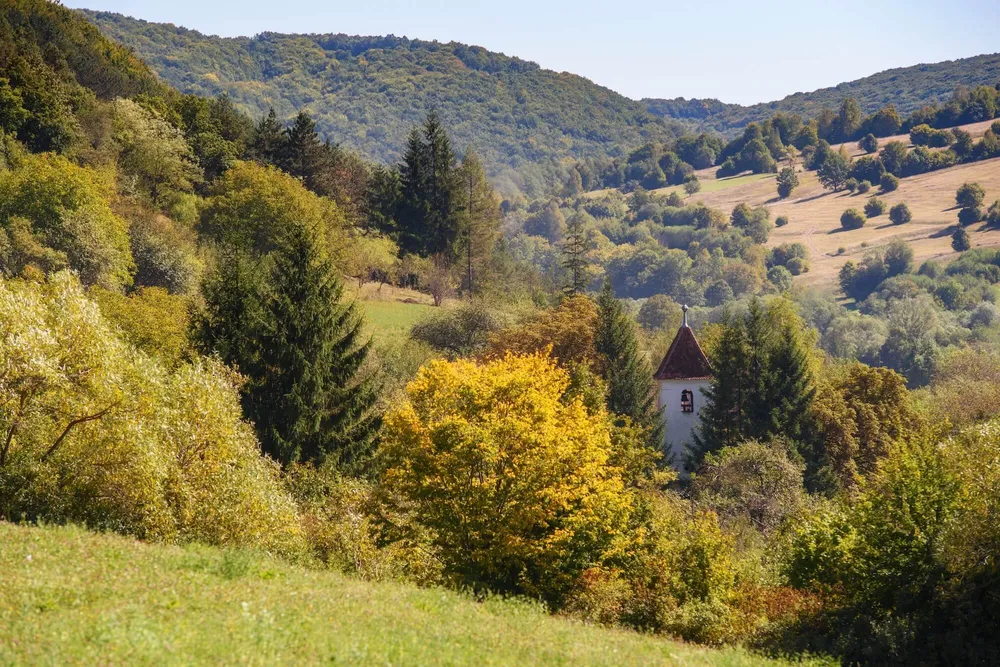
If you are looking for untouched landscapes, Transylvania is the answer. Romania’s Carpathian Mountains represent one of the last truly wild corners of the continent, offering a level of biodiversity that has largely vanished from Europe.
Wildlife in Romania's Ancient Forests
Transylvania is home to Europe’s largest population of Brown Bears, while they mostly steer clear of humans, having the chance to witness these animals in their natural habitat is a keystone for wildlife tourism in Romania. Grey Wolves & Eurasian Lynx are two other rare and elusive species that call this region their home and thrive in the vast, protected corridors of the Carpathians.
A Sanctuary for Slow Travel
Beyond the predators, the air above the forests is filled with Golden Eagles, kestrels, and buzzards, while the forest floor is home to wild boar and red deer. What makes this a unique destination for adventure cycling and hiking isn't just the wildlife; it’s also the terrain. You’ll find yourself pedalling through ancient, little-visited forests of beech, oak, and pine.

2. A Living History: Transylvania’s Medieval Saxon Villages
The cultural heart of this region lies in its unique Saxon heritage. In the 12th century, King Géza II of Hungary invited settlers from the Mosel Valley, Flanders, and Luxembourg, collectively known as 'Saxons', to farm and defend this frontier against Ottoman and Tatar invasions. For eight centuries, these communities thrived, creating a landscape dotted with over 200 meticulously planned villages. Following the Second World War and the eventual fall of communism, many Saxons returned to Germany, leaving behind the towns and villages.
When you visit today, you are stepping into some of Europe’s best-preserved medieval citadels. The fortified churches are unique defensive structures built to protect villagers during sieges - architectural marvels found nowhere else on this scale. Famous spots like Sighișoara are also UNESCO World Heritage Sites, and one of the few remaining inhabited medieval citadels, as is the iconic village of Viscri. Strolling through these villages feels like walking through a living museum, with magnificent merchant houses and cobbled squares that have survived the centuries.

3. Step Back in Time: Rural Life in the 21st Century
Stepping into the Transylvanian countryside is like walking into a pre-industrial landscape. While much of Europe has modernised beyond recognition, here, the rhythms of life remain beautifully traditional. Expect to see horse-drawn carts rumbling along dusty lanes, shepherds tending their flocks under the stars, and village cows instinctively finding their own stable doors after a day’s grazing. A genuine, thriving way of life that prioritises community and the land.

4. A Botanist’s Paradise: Wildflower Season
If you visit in May or June, the Transylvanian highlands transform into a technicolour tapestry. These ancient hay meadows are home to a staggering variety of flora, including rare Wild Orchids, Ragged Robin, Cowslips and Hellebores. The fragrance and vibrant hues are a sensory overload, making this the peak season for nature photography and botanical tours in Romania.

5. Romania's Architectural Wonders
While many tourists flock to the craggy cliffs of Bran, the true architectural soul of the region lies in its Fortified Churches. An architectural highlight of the region is the 11th-century church in Viscri, a UNESCO-protected masterpiece. These structures were built as sanctuaries for entire villages, and today they still stand watch over the pastel-coloured houses and pristine forests.

6. Responsible Wildlife Encounters: Europe’s Brown Bears
Romania is the home of thousands of European Brown Bears. Thankfully, the tide has turned toward conservation; the government has recently banned trophy hunting for iconic species, including wolves, lynx, and wild cats. This offers opportunities to observe these magnificent creatures through responsible wildlife tourism that supports local conservation efforts.

7. Truffle Hunting in Transylvania
From September to January you can sample the wonderful, secretive world of truffle hunting in one of the most prized truffle regions in the world. Although the French and Italian truffles are better known, expert ‘trufflers’ agree that those found in Romania are of equal or superior quality. These truffles are so exquisite because the soil is rich and the temperate climate perfect in their ancient, pristine forests. And the experience – led by trained dogs – is wonderful, especially once the leaves have turned in late September.

8. HM King Charles III and Viscri
HM King Charles III first discovered Transylvania back in 1998. A passionate supporter of the countryside and a keen amateur botanist, he fell in love with the place. He even bought himself a cottage in the tiny Saxon village of Viscri and has recently set up a charitable organisation, The Prince of Wales’s Foundation Romania, which aims to support heritage preservation, traditional agriculture and sustainable development. He has donated the house in Viscri to the charity and now has another guest house (below), in which visitors to the region can stay.

9. World-Class Cycling Trails in Transylvania
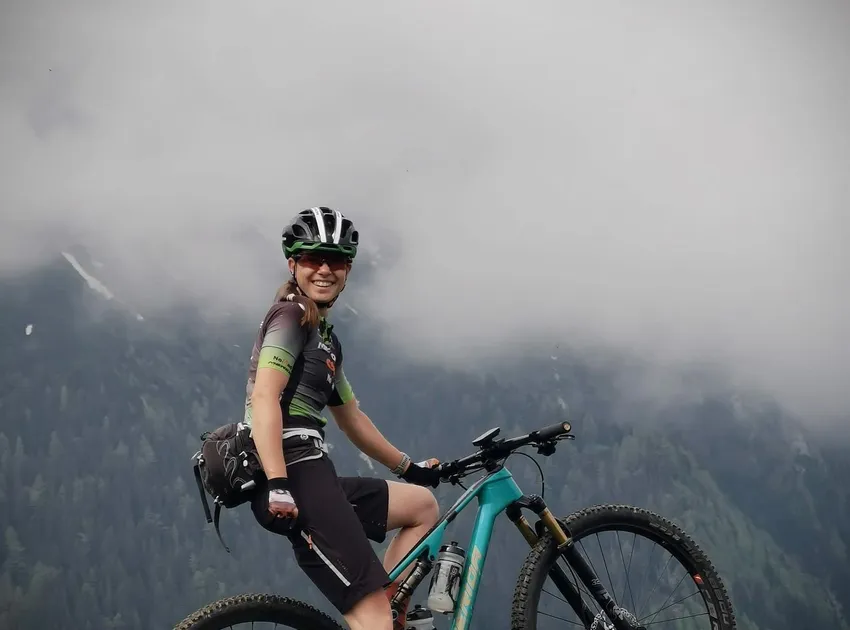
Over the past couple of years, some imaginative locals have built over 80 kilometres of cycling trails from Sighisoara to Viscri. They enable riders to get well off the beaten track and see the best bits of some incredible countryside, including the celebrated forests. And if you choose your route carefully, the cycling doesn’t have to be tough.

10. Authentic Romanian Gastronomy and the 'Pălincă' Tradition
Rural Transylvanians like to start a meal with a slug of double-distilled brandy, called ‘palinka’. This fiery aperitif sometimes reaches 60% alcohol content and is the perfect accompaniment to a traditional ‘ciorba’ or soup, some perfectly grilled pork and a plate of homegrown salad. Did we mention that if you spend a week staying in local homes and guest houses in Transylvania, you won’t eat a thing that hasn’t been homemade? The food is to die for . . . just like the place!

If like us you're inspired to visit Transylvania, you can view our scheduled trips, or alternatively, we can arrange a private journey for you and your group.