Herefordshire's History: From the Stone Age to King Arthur
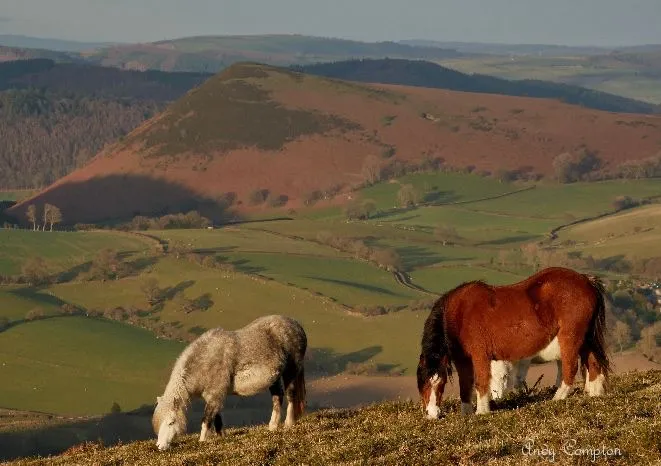
Herefordshire and the Welsh borders were once areas of great turbulence; the contested ground between England and Wales is scattered with the remnants of battles and fortifications. Over 400 castles were built there from 1066 through to the 16th century, from Norman motte and baileys to the stone castles of the Marcher Lords. Once known as the Welsh Marches, the region encompassing Herefordshire and the Welsh borders represents one of the most fortified landscapes in Europe. It also serves as a key setting for the Arthurian myths and legends, with local landmarks and early Welsh texts deeply anchoring the story of King Arthur within the Herefordshire landscape.
King Arthur in Wales and Herefordshire
Still a popular figure in books and media, most of us have heard of the legendary King Arthur, but there is still much to be discovered about his story. Herefordshire is central to the Arthurian Mythos; many scholars and local historians point to the Welsh Marches as the likely setting for the "historical" Arthura, a Romano-British leader who defended against Saxon invaders. Early Welsh texts also frequently reference the landscape of the Welsh Marches. The legendary Caerleon, often identified as a site of Arthur’s court, sits just south of the Herefordshire border, reinforcing the idea that this frontier was the beginning of the Arthurian legend.
Arthur’s Stone
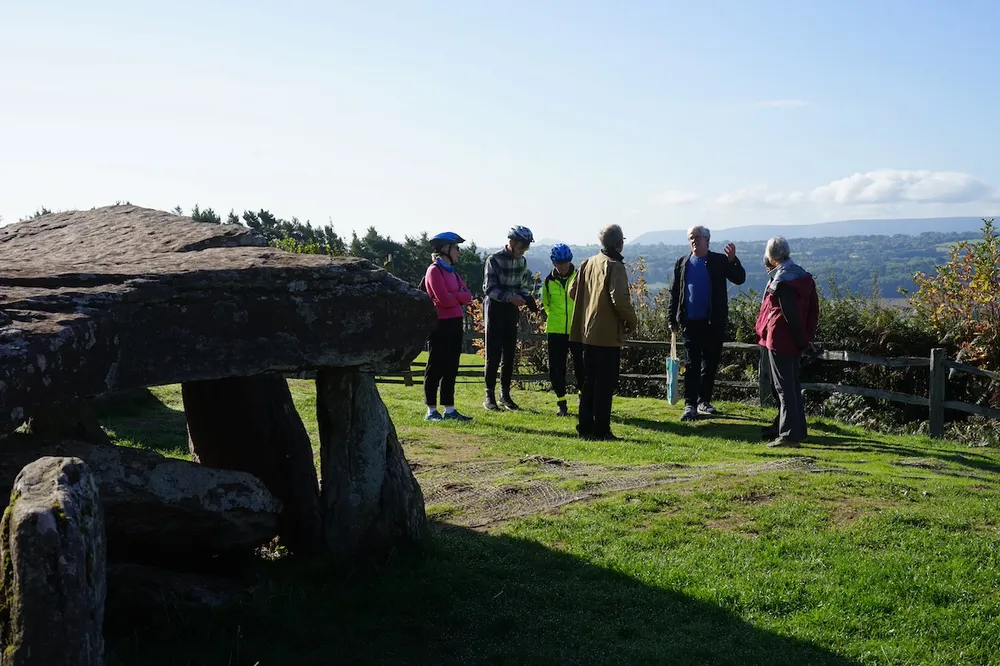
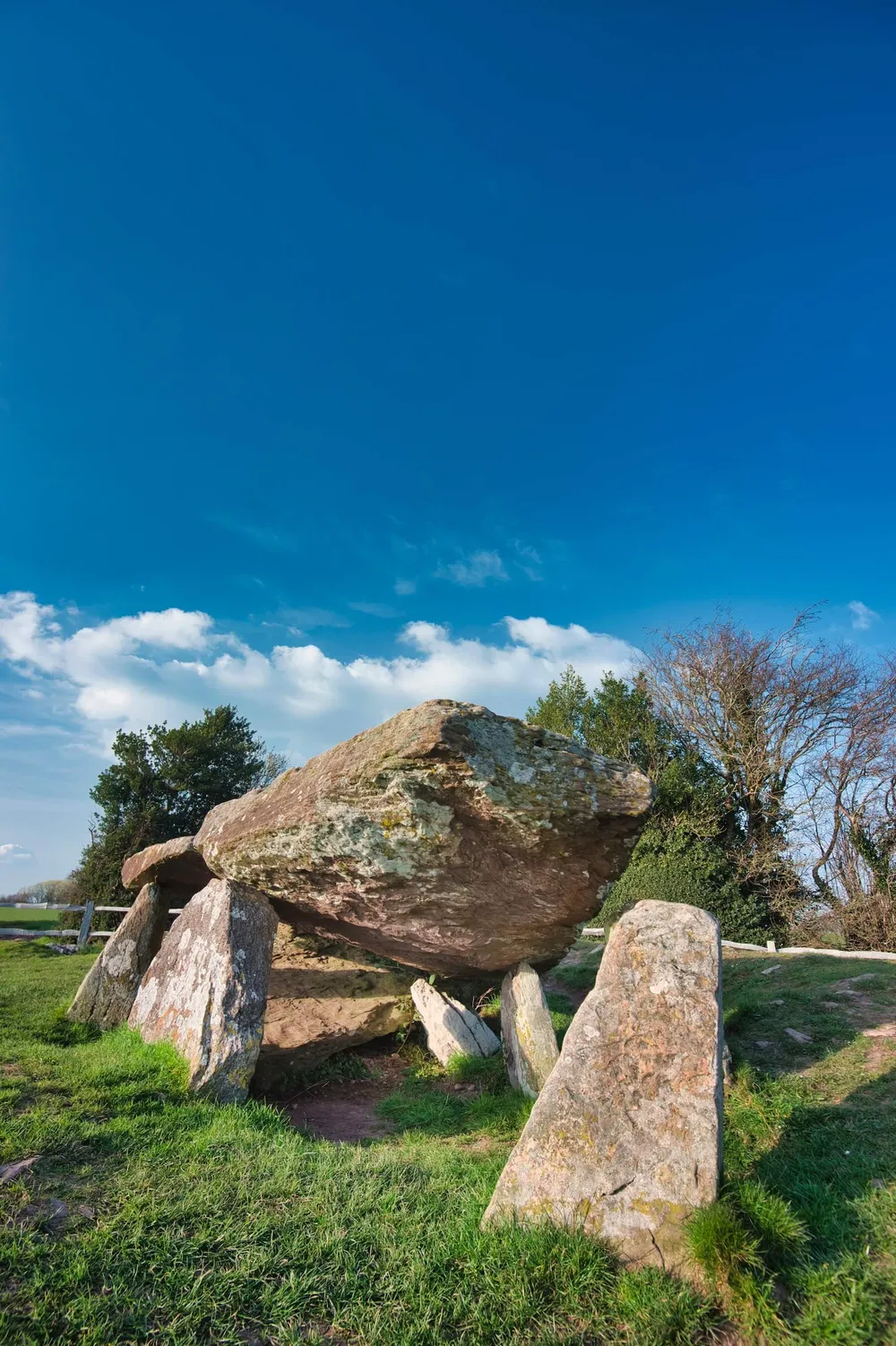
Close to the Golden Valley, in the heartland of Herefordshire, lie the remains of an ancient settlement. Thought to date back over 5,000 years, this Neolithic site has long been connected to the myths of King Arthur. According to legend, this was the site where King Arthur slew a giant and left an imprint of his elbow on one of the stones when he fell. While this may be a tenuous historic link, this is the site of a Neolithic tomb or burial chamber atop a long earthen mound, named Arthur’s Stone, made of large stone slabs that have been dated to the 13th century.
Offa’s Dyke
Offa's Dyke is a great earth wall and ditch that's now been repurposed into a 177 mile walking trail running the length of the Wales/England border. The eighth-century Offa’s Dyke remains a monumental feat of early engineering, marking the historic divide between ancient kingdoms. Alongside this military history is another connection to the Arthurian tradition; local lore and early Welsh texts frequently link the origins of King Arthur to these borderlands, suggesting that the region's rugged topography provided the foundations for Britain's enduring myth.
Castles of Herefordshire
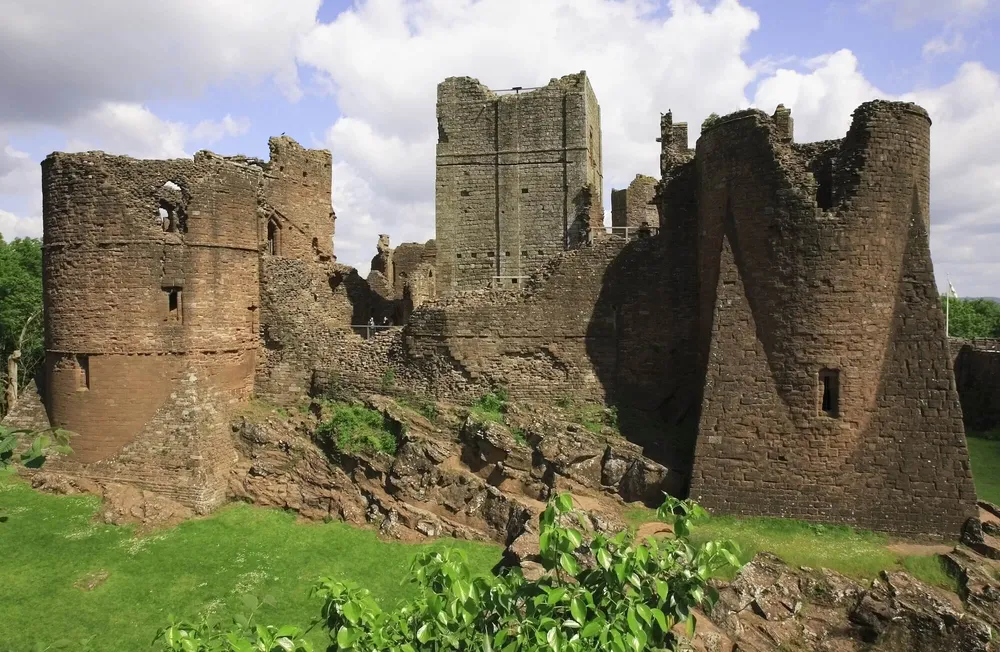
Although the imposing castles of Herefordshire may look like something from a King Arthur story, they're firmly rooted in history, rather than legend. The earliest castle structures in Herefordshire were the motte and bailey castles, like those found at Wigmore and Richard’s Castle. They began as timber towers atop earthen mounds (mottes) with enclosed courtyards (baileys). These were built quickly to suppress local resistance, but didn’t have the longevity of the later stone strongholds. By the 12th and 13th centuries, motte and bailey structures were replaced by formidable stone fortresses. Goodrich Castle and Ludlow Castle are examples of this transition, featuring sophisticated gatehouses and residential apartments that reflected the immense wealth of the border barons who lived within.
Experience King Arthur's Herefordshire for yourself on one of our Herefordshire electric bike journeys, enjoy the wonderful farm-to-table dining, heritage, and stunning landscape of this county.